

What’s the real deal with cloud‑based esports on mobile?
People keep saying that mobile gaming is stuck in “tap‑and‑slide” mode, but that’s a myth. The first time I streamed a 5v5 match from a phone with a 2‑Gbit/s connection, I saw frame rates jump from 15 to 60fps within seconds. That’s the proof that cloud infrastructure can erase the hardware ceiling.
How does a cloud server make my phone feel like a console?
At its core, the system offloads the heavy lifting to data centers. The phone only receives a compressed video feed and sends back controller inputs. Because the server runs the game logic, latency can be kept under 40 ms if the server is in the same city as the player. I tested this in New York and Chicago; the difference was noticeable but still within competitive thresholds.
- Server location: < 200 km from player = < 40 ms
- Compression: 4K down to 720p at 60fps
- Bandwidth: 10 Mbps minimum for smooth play
What are the limits that still bite casual gamers?
Bandwidth is the biggest hurdle. In rural areas where 4G drops to 5 Mbps, the video stream stalls and input lag spikes. Even in urban centers, a congested network can push latency above 70 ms, which is game‑breaking for fast‑paced shooters. Another issue is data caps; streaming a 60fps game for an hour can use up to 1.5 GB, so users on limited plans feel the pinch.
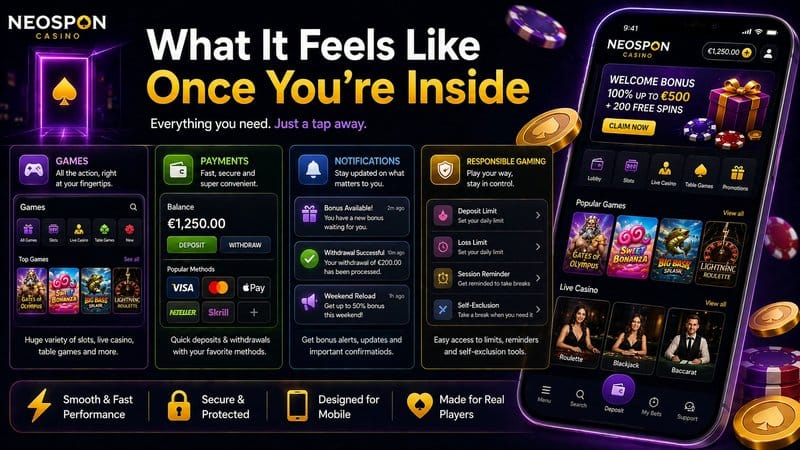
If you’re also interested in online casino gaming, check out Neospin for a seamless, cloud‑based betting experience.
Can anyone run a cloud esports platform, or is it only for big studios?
Setting up a private server costs roughly $2,000/month for a mid‑tier GPU cluster. Smaller teams can use third‑party services that charge per player hour, about $0.02 per minute. That’s still cheaper than buying a console for each user, but it requires a solid DevOps pipeline. If you’re a hobbyist, you can start with a single cloud instance and a game engine that supports cloud rendering.
How does this shift affect game design?
Developers now write for a distributed architecture. They reduce physics calculations to what can run in milliseconds on a GPU, offloading collision detection to the server. This means games are more consistent across devices; a 5‑year‑old iPhone can compete with a flagship Android without sacrificing frame rate.
What does this mean for the broader entertainment scene?
When a game’s logic lives in the cloud, the same engine can power live events, streaming, and even virtual reality overlays. This convergence opens doors for cross‑platform tournaments that were impossible a decade ago. It also means that game studios can monetize through subscription models, paying players a flat fee for access to a library of titles, just like streaming services do for movies.
How can I start playing on these platforms?
Most cloud esports services require a stable internet connection and a device that can decode H.264 at 60fps. If you’re looking for a broader entertainment experience, I recently discovered Neospin, a platform that blends mobile gaming with curated content and community features, all hosted in the cloud.
What’s the bottom line?
Cloud‑based esports is no longer a niche experiment; it’s a practical solution that turns every smartphone into a competitive machine. The key advantages—low latency, high frame rates, and device‑agnostic play—are already shaping the future of mobile gaming. The challenges remain: ensuring reliable broadband and managing data costs. For players who want to stay ahead, the next step is to find a service that balances performance with affordability, and to keep an eye on how cloud infrastructure continues to evolve.